

Published by Giovanni Patania
on 09/10/2026
A tenant who is happy with the room, the housemates and the way problems get handled rarely goes looking for somewhere else to live. A tenant who has to chase you for a repair, or who never quite knows what the WiFi password is, starts scrolling Rightmove the moment their contract allows it. Improving tenant experience is not about running a hotel. It is about closing the small gaps that quietly push good tenants out the door, taking a chunk of your rental income and your reputation with them.
This guide is for single landlords running their first HMO and portfolio landlords managing several, who want a practical, unglamorous way to improve tenant experience: fewer voids, fewer complaints, and tenants who renew without being asked twice. It covers what tenant experience actually means in a shared house, the moments that shape it most, and where design does more of the work than management ever will.
If you want a second pair of eyes on how a property is set up before tenant problems start, book a free call and we will talk through what is actually costing you renewals.
What tenant experience actually means in an HMO
Tenant experience is everything a tenant feels between viewing the room and handing back the keys: how quickly a repair gets sorted, whether the kitchen actually works, how it feels walking through the front door after a bad day. In a single-let, most of that is invisible because there is only one household to manage. In an HMO, five or six strangers are sharing kitchens, bathrooms and bins, so friction that would never surface in a normal tenancy shows up fast, and it shows up as complaints to you.
The mistake most landlords make is treating tenant experience as a personality trait, something you either have or don’t as a “nice” landlord. It isn’t. It’s a set of repeatable systems: how fast messages get answered, how repairs get logged, how new tenants are introduced to a house that already has its own habits. Get the systems right and you don’t need to be endlessly available. Get them wrong and no amount of friendliness stops a good tenant leaving quietly at the end of their term.
The move-in experience sets the tone
The first two weeks in a new HMO decide more about retention than the following two years. A tenant arriving to a room that smells of fresh paint, a working shower, a clear note on bin day and who their housemates are, starts the tenancy trusting you. A tenant who arrives to a half-finished snag list and has to work out the boiler themselves starts the tenancy braced for the next thing to go wrong, and that posture rarely softens.
Practical routing for move-in day: confirm the room is fully snagged and cleaned before keys are handed over, not the week after; give every new tenant a short written welcome covering bins, WiFi, parking and who to contact for what; and introduce them to at least one existing housemate, even briefly, so the first evening in a house full of strangers feels less like a hotel corridor. None of this needs a big budget. It needs someone to own it as a checklist rather than assume it will happen naturally when a room turns over.
Communication and responsiveness
Ask any tenant what makes a landlord good or bad and the answer almost always comes back to speed, not outcome. A tenant will forgive a repair that takes three days if you told them it would take three days. They won’t forgive silence, even if the repair itself only takes an hour once someone turns up.
Set a response standard you can actually hold yourself to, then say it out loud to tenants so they know what to expect: acknowledge within 24 hours, give a repair timeline within 48, and if a job is going to run late, say so before the deadline passes rather than after. A slow reply to a leaking tap costs more in trust than the repair itself costs in cash, because it tells the tenant nobody is really looking after the house. If you’re not confident your current process for logging and closing repair requests holds up under six tenants at once rather than one, our landlord responsibilities and compliance checklist is a useful sense check on what should be tracked and when.
Where design does the work before you say a word
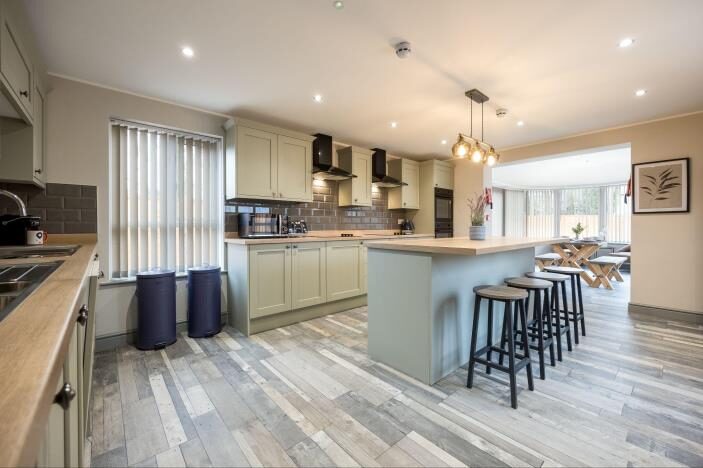
Here is the part most tenant-experience advice skips entirely: a huge amount of friction in an HMO is decided at the design stage, long before a tenant ever complains about it. Thin partition walls between bedrooms generate more noise complaints than any house rule can fix after the fact. A kitchen sized for four people trying to serve six generates queuing and irritation every weekday evening. A communal lounge nobody wants to sit in, because it was an afterthought in the floor plan, means tenants retreat to their rooms and never build the goodwill that makes them renew.
This is where the HMO Architects Dual-Lens Approach™ earns its place. We design HMOs as architects and run them as investors, so we’re weighing tenant experience and yield in the same conversation, not treating them as separate problems solved by different people at different stages. Soundproofing, storage, and communal proportions are not “nice to have” line items competing against room count; they are the difference between a house that fills itself through word of mouth and one that needs constant re-marketing.
We apply this thinking through what we call the HMO Harmony Framework™ — checking whether a house has clear expectations, consistently enforced rules, tenant understanding of how the house works, proper documentation, and a fair process for resolving disputes. Most conflict in a shared house traces back to at least one of those five being missing, not to difficult tenants.
Across the HMO Architects™ portfolio of conversions in 12 locations — including a former church and a former police station reworked into HMOs — the layouts that retain tenants longest are rarely the ones that squeezed in the most bedrooms. They’re the ones where communal space, storage, and sound separation were treated as retention tools, not compliance boxes. Our Sidmouth Street project in London, converted for young professionals, is a good example: prioritising a genuinely usable communal kitchen-diner over an extra small bedroom is exactly the kind of trade-off that shows up months later as renewals rather than voids.
House rules that reduce friction instead of creating it
House rules exist to prevent disputes, not to give a landlord ammunition after one has already happened. A rule that nobody can explain in one sentence gets ignored within a month, and an ignored rule is worse than no rule at all because it teaches tenants that none of the rules are really enforced.
Before adding a rule, run it through a simple test: is it clear, is it reasonable, is it enforceable, and is it actually necessary? A rule about bin day that nobody can remember fails on clarity. A curfew fails on reasonableness in most shared professional housing. A quiet-hours rule with no way to check whether it’s being followed fails on enforceability. Cut anything that fails, because a shorter list of rules that are actually followed does more for tenant experience than a long one that isn’t. Our full HMO house rules guide for tenants sets out the rules that tend to hold up in practice, with the reasoning tenants actually respond to.
Digital convenience without over-engineering it
Tenants increasingly expect the same low-friction service they get from every other app in their life: report a problem, get a timestamp, get an update, done. You don’t need to build this yourself. Property management software that logs repairs, stores documents and gives tenants one place to raise issues removes a huge amount of the back-and-forth that erodes goodwill, and it gives you a record if a dispute ever does escalate. Our property management software comparison guide covers the main options if you’re still running this over WhatsApp and a shared spreadsheet.
If tenant communication and compliance paperwork is the specific bottleneck, an app like COHO is built for exactly that — giving tenants a single channel to raise issues and giving you a dated record of every check and conversation, which matters as much for evidencing good management as it does for day-to-day convenience.
Balancing service with profitability
None of this means saying yes to every request or turning every room into a boutique let. Tenant experience and profitability usually pull in the same direction, because a renewed tenancy costs nothing to fill while a void costs a full re-letting cycle on top of the rent lost while the room sits empty. Landlords who struggle with this balance are usually treating every improvement as a cost rather than checking which ones actually move retention.
Should You Invest in a Tenant Experience Overhaul? If you answer “no” to any of these, fix the basics before spending on anything else:
- Are repairs currently logged and acknowledged within 24 hours, every time?
- Does every new tenant get a proper welcome and house introduction, not just a key handover?
- Can you explain every house rule in one sentence, and is it actually enforced?
Fixing those three costs very little and moves retention faster than any amenity upgrade will.
What to do next
If you’re setting up a new HMO, the cheapest time to fix tenant-experience problems is at the design stage, before a single wall goes up, not eighteen months in once complaints start. If you’re already managing tenants and losing more than you’d like at renewal, the fastest fix is usually the boring one: tighten response times, clean up the welcome process, and cut any house rule you can’t defend in one sentence.
Book a free call and we’ll look at your current layout or management setup, tell you honestly where the friction is coming from, and agree the most useful next step, whether that’s a design review or a management fix. It costs nothing to find out which one applies to you before you spend on either. For more on what you’re legally and practically responsible for as an HMO landlord, our landlord responsibilities and compliance checklist is a useful next read, and our HMO Masters newsletter covers this kind of practical detail regularly.
FAQs
How do you improve tenant experience in an HMO?
Start with response speed, the move-in process, and how clearly rules are explained; these three drive more tenant satisfaction than any amenity upgrade. Tenants judge a landlord on how quickly they hear back at least as much as on how quickly the actual repair gets finished.
Does improving tenant experience really affect void periods?
Yes. A tenant who renews costs nothing to re-let. A tenant who leaves costs marketing time, viewings, cleaning, and rent lost while the room sits empty, so retention is one of the most direct routes to protecting yield.
Can design changes really improve tenant experience, or is that just management?
Both matter, but design sets the ceiling. A house with poor soundproofing or an unusable communal kitchen will generate friction no management system can fully offset. Good management gets you to that ceiling; good design raises it.
How many house rules should an HMO have?
As few as genuinely needed. A short list that’s consistently enforced does more for tenant experience than a long list tenants have stopped reading.
Published by Giovanni Patania
on 09/10/2026
Giovanni is a highly accomplished architect hailing from Siena, Italy. With an impressive career spanning multiple countries, he has gained extensive experience as a Lead Architect at Foster + Partners, where he worked on a number of iconic Apple stores, including the prestigious Champs-Élysées flagship Apple store in Paris. As the co-founder and principal architect of WindsorPatania Architects, Giovanni has leveraged his extensive experience to spearhead a range of innovative projects.