
Published by Giovanni Patania
on 07/14/2026
Serviced accommodation often looks like the obvious upgrade from buy-to-let.
Higher nightly rates. More flexibility. Stronger income potential.
But most properties that work on paper do not work in reality. The gap between expectation and operation is where many investors lose money: demand is weaker than assumed, cleaning costs are higher than expected, guests need more management, or the planning and control position was never properly checked.
Most serviced accommodation deals do not fail because the idea is wrong. They fail because the wrong property is forced into the model.
At HMO Architects, we look at this through our Serviced Accommodation Viability Filter™. Before committing to a short-stay model, the deal needs to be tested across demand, planning, operations, and property fit. If one of those is weak, the income case can start to fall apart quickly.
If you are looking at a live deal, conversion, or short-stay strategy, this is where a quick review can stop you committing to the wrong model. You can book a free serviced accommodation feasibility call and use the conversation to sense-check the property before you move too far.
Keep reading and you will come away with a clearer view of what serviced accommodation actually means, why some properties suit it and others do not, and what to check before you commit.
What Is Serviced Accommodation?
If you are trying to pin down what serviced accommodation actually means, start with the operating model rather than the marketing label.
In simple terms, serviced accommodation usually means a fully furnished property offered for shorter stays, with a setup that feels closer to guest accommodation than a standard tenancy. That often includes furniture, kitchen equipment, Wi-Fi, linen, cleaning between stays, and a guest experience designed around convenience and flexibility.
In the UK, serviced accommodation sits between traditional residential letting and short-stay hospitality. You are not simply handing over a property on a longer tenancy and stepping back. You are operating an accommodation business with more movement, more touchpoints, and more day-to-day responsibility.
What Serviced Accommodation Usually Includes
At a practical level, most serviced accommodation will include a fully furnished layout, a ready-to-use kitchen, internet access, linen, cleaning between stays, and a process for guest handover.
Some properties are aimed at tourists. Others suit business travellers, contractors, relocating families, or guests who need a short stay that feels more comfortable than a hotel room. That is where the model can become commercially interesting. A well-positioned property with the right setup can meet a very different kind of demand from a standard rental.
Why the Label Can Be Misleading
“Serviced accommodation” can cover several types of short-stay use. A serviced apartment, holiday let, Airbnb-style flat, or corporate short-stay unit may overlap in practice, but they are not always treated the same.
This is where many investors get caught: assuming all short-stay models are treated the same. They are not. The planning route, mortgage terms, lease restrictions, insurance position, safety duties, and management model can all change depending on how the property is actually used.
Why Investors Are Drawn to Serviced Accommodation
The appeal is easy to understand.
A serviced accommodation investment can offer more pricing flexibility than a standard let. In the right location, with the right guest profile, it may also create stronger income periods than a property on a fixed monthly tenancy.
That is often what draws landlords in. The route can look more dynamic, more adaptable, and more rewarding than a simpler rental model.
Where the Upside Can Come From
If the property is close to a business hub, hospital, tourist area, transport link, university, or event-driven location, short stays may be easier to sustain. Some properties also perform well because they offer something more distinctive than a standard hotel room, such as a better layout, more privacy, or a more homely feel for longer short stays.
This is where serviced accommodation examples can mislead if you only look at headline rates. The stronger cases usually work because the property, guest demand, and operating model line up properly.
Where the Pressure Usually Shows Up
Occupancy can move around. Cleaning and linen need managing. Guests need communication and support. Reviews affect future bookings. Pricing needs attention. Platform dependence can leave the property more exposed than a standard let.
The main takeaway is simple: serviced accommodation often takes more active management than many landlords expect at first. Performance is driven as much by operation as by property.
For some investors, that creates opportunity. For others, it turns what looked like an investment into a business they do not really want to run.
Use the Serviced Accommodation Viability Filter™ Before You Commit
Before committing to any serviced accommodation deal, run this checklist in order. It is the same structure we use when thinking through whether a short-stay model is likely to suit the property, the market, and the investor behind it.
- Demand Fit: Is there consistent, non-seasonal demand from tourists, contractors, business travellers, hospital visitors, relocating families, or another clear guest group?
- Planning & Control: Is the use permitted, sustainable, and allowed by the lease, mortgage, insurance, and local planning position?
- Operational Load: Can the cleaning, linen, guest communication, pricing, maintenance, and booking management actually be delivered?
- Property Fit: Does the layout support guest experience, turnover, privacy, durability, and long-term flexibility?
Most serviced accommodation projects fail because one of these is weak, not because the model itself is always wrong.
Before You Buy or Convert Anything, Check These First
The order matters. It stops you getting excited about nightly rates before you know whether the property can realistically support the model.
Step 1: Check the Location and Demand Pattern
You need to know who is likely to stay there, and why. Is the demand mainly tourist-led, business-led, contractor-led, hospital-related, or driven by relocation and family visits? Is that demand seasonal, event-led, or more stable across the year?
Without consistent demand, the model breaks regardless of pricing. A high nightly rate means very little if the property cannot hold occupancy across the periods that matter.
Step 2: Check Planning, Local Controls, and Use Assumptions
Serviced accommodation is not just a furnishing choice. Depending on the property, location, and scale of use, the planning position may need careful review.
In England, your local planning authority decides whether planning permission is needed based on how the property is used for short-term letting and its impact on neighbours and the local area. The government is also introducing a mandatory national registration scheme for short-term lets in England, expected to begin in 2026, so this is a point to check before publication or purchase.
London has its own short-term letting rule. Unless planning permission is obtained, short-term letting of residential property is restricted to a maximum of 90 nights in a calendar year. The London short-term letting guidance is worth checking if the property is in the capital.
If the property is in another part of the UK, check the local route there instead of assuming England guidance will carry across. This is one of the biggest hidden risks in serviced accommodation.
Step 3: Check Fire Safety, Guest Safety, and Operating Compliance
If the property is going to be used for paying guests on a short-stay basis, you need to understand the relevant fire safety and guest safety duties for that model.
That may affect alarms, escape routes, information, testing, maintenance records, and the wider way the property is set up and managed. This is often where deals that look good stop working, because the real cost of making the property safe and operational was not built into the numbers.
Step 4: Check Mortgage, Insurance, Lease, and Management Terms
A property may look viable as serviced accommodation, but the mortgage product may not allow that use. The insurance may need changing. A leasehold property may have restrictions. The management burden may also be heavier than you want to carry yourself.
These points are not admin afterthoughts. They can decide whether the model is actually available to you.
What Serviced Accommodation Needs in Practice
Many landlords focus on income first. In practice, the way the property is furnished, laid out, cleaned, photographed, maintained, and operated often shapes performance just as much.
Furnishing, Layout, and Guest Experience
A serviced accommodation property needs to work well, not just look good in photos.
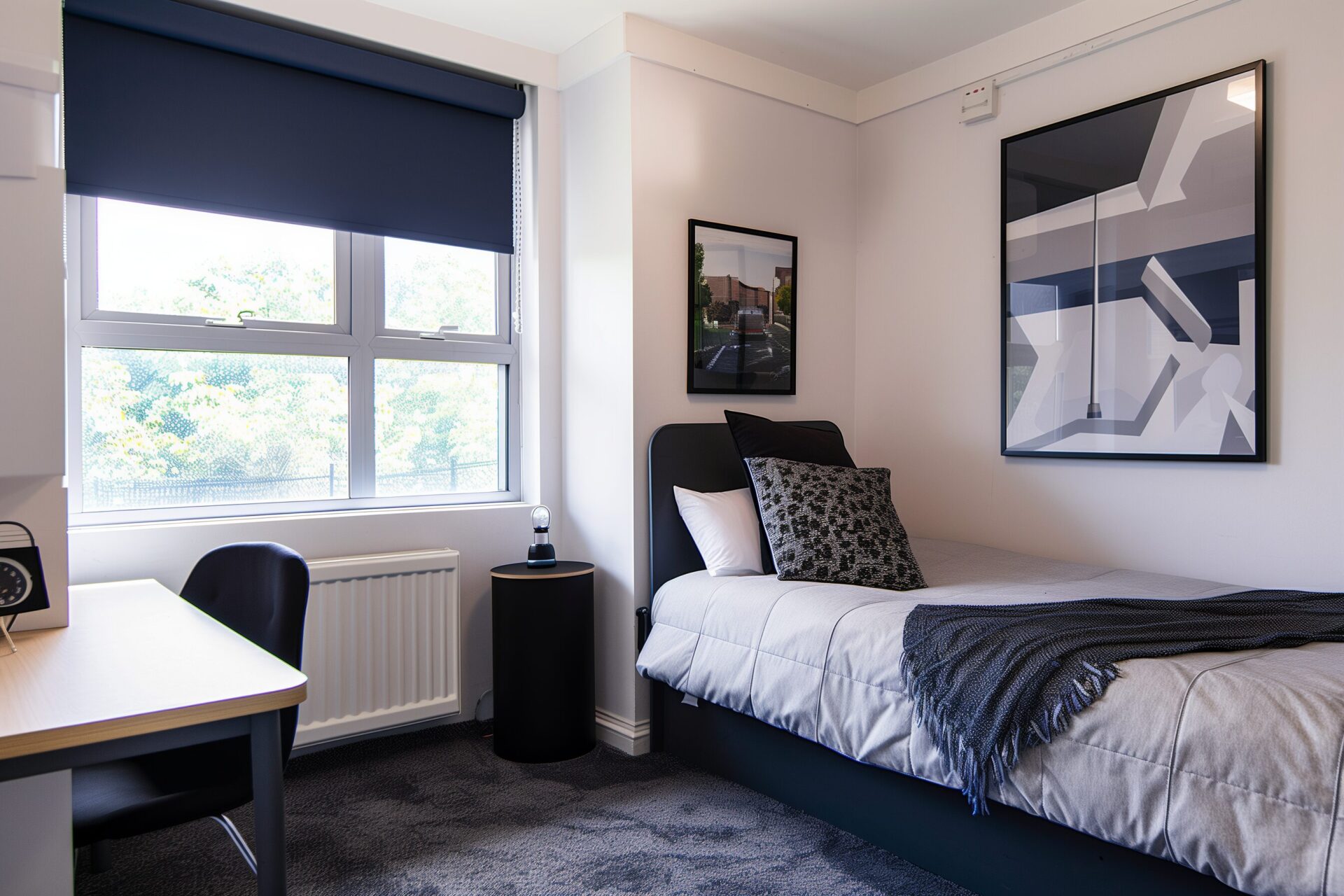
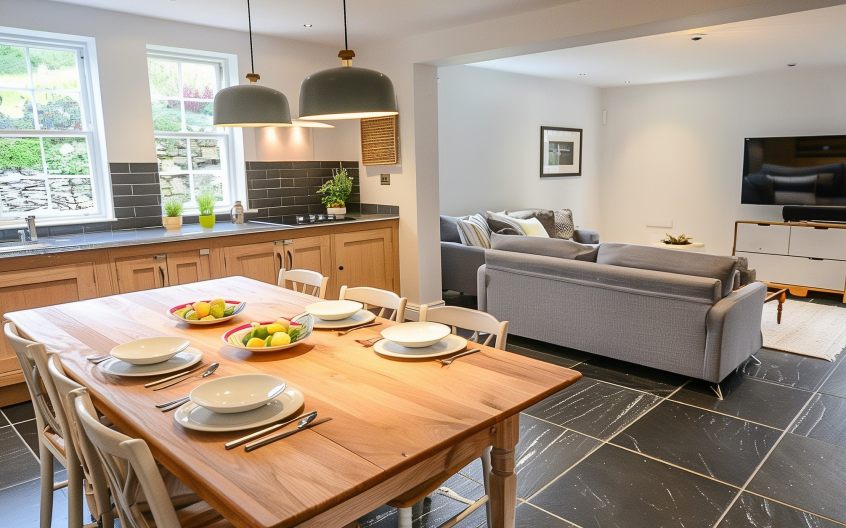
Guests need the space to feel easy to use. The layout should be clear. The furnishing should be durable. Storage, lighting, bathrooms, and kitchen setup all matter. If the design feels awkward, tired, or too fragile for regular guest turnover, the operation can become harder than it needs to be.
This is where professional design creates measurable returns, not just aesthetic improvements. Good guest experience supports reviews, repeat bookings, and the long-term resilience of the setup.
Operations, Cleaning, and Turnover
Short stays mean more moving parts. You need a reliable cleaning process, linen turnaround, check-in arrangements, efficient guest communication, maintenance response, and a way to monitor quality between stays.
This is where many landlords realise they have bought a business, not just an investment.
Serviced Accommodation vs HMO vs Buy-to-Let
An HMO and serviced accommodation can both look like higher-yield strategies, but they are not the same kind of business.
| Model | Income | Effort | Risk | Stability |
|---|---|---|---|---|
| Serviced accommodation | Variable, with high potential | High | High | Low to medium |
| HMO | Strong, if the setup works | Medium | Medium | Medium |
| Buy-to-let | Usually lower | Low | Lower | High |
An HMO usually depends on room-by-room letting and shared residential occupation. Serviced accommodation depends more on guest demand and short-stay turnover. A buy-to-let is usually simpler to manage once the tenancy is in place, but the income ceiling may be lower in some markets.
If you are weighing up HMO vs holiday let routes, the real question is not which one sounds more profitable on paper. It is which model suits the building, the local market, and the kind of management you are actually prepared to handle.
A Real Example of Serviced Accommodation in Practice
The reason to include a real example here is not to suggest that every property should follow the same route. It is to show what a better-fit short-stay project can look like when the brief, the layout, and the guest experience are treated properly.
High Street, Cambridge
A useful example is the High Street, Cambridge project.
Before the work, the property was a neglected cottage with potential, but it needed more than a quick furniture package. The strategy was to reposition the building as an Airbnb-style short-term let with stronger interior design, a more guest-ready layout, and enough flexibility to support future use.
The outcome was a more resilient short-stay model because the property was shaped around guest appeal, practical operation, and long-term flexibility, rather than simply being dressed up and placed online.
For a single landlord thinking about whether to invest in serviced accommodation, that matters. It shows that the route is not just about chasing a nightly rate. The design quality, compliance route, and operational thinking all shape whether the setup will actually work.
What to Do Next If You Are Still Deciding
If you are still weighing up whether to invest in serviced accommodation, the next move is to test the actual property.
Start with the location demand, the planning position, the finance and insurance setup, and the operating model you are realistically prepared to manage. A project feasibility call is often the quickest way to sense-check whether the route stands up.
If you are comparing strategies, start with the HMO vs holiday let guide so you can see the trade-offs more clearly. If you want to pressure-test the numbers first, this mortgage calculator is a useful tool.
If you would like occasional guidance on HMOs, short-stay models, planning pressure, and layout decisions, you can join the HMO Masters newsletter.
FAQs
What Is Serviced Accommodation?
Serviced accommodation usually means a fully furnished property offered for shorter stays, with a guest-ready setup that sits closer to short-stay accommodation than to a standard tenancy.
Is Serviced Accommodation the Same as a Holiday Let?
Not always. The terms can overlap in practice, but the way the property is used and regulated may not be identical in every case. That is something to verify for the actual model you are planning.
Is Serviced Accommodation More Profitable Than Buy-to-Let?
Sometimes it can be, but that depends on demand, occupancy, pricing, costs, and management input. The stronger question is whether the full model works better for your property and market.
What Is the Difference Between an HMO and Serviced Accommodation?
An HMO is usually a shared residential letting model with longer occupation patterns and a different compliance route. Serviced accommodation is a short-stay guest model with more turnover, more operational input, and a different set of checks.
Do You Need Planning Permission for Serviced Accommodation?
Sometimes you may need to review the planning position carefully, depending on the property, location, and scale of use. In England, the local planning authority decides whether permission is needed based on use and local impact. London has a separate 90-night rule for short-term letting unless planning permission is obtained.
Is Serviced Accommodation More Work to Manage?
In most cases, yes. Cleaning, guest communication, booking management, turnover, maintenance response, and reviews usually make it more hands-on than a standard let.
What Should You Check Before Investing in Serviced Accommodation?
Start with location demand, planning position, guest safety requirements, mortgage and insurance terms, and whether the day-to-day operating model suits you as well as the property.
Can a Normal Buy-to-Let Become Serviced Accommodation?
Possibly, but do not assume the switch is simple. You need to check the mortgage, lease, insurance, planning position, safety requirements, furnishings, and whether the local demand can support short-stay use.
Published by Giovanni Patania
on 07/14/2026
Giovanni is a highly accomplished architect hailing from Siena, Italy. With an impressive career spanning multiple countries, he has gained extensive experience as a Lead Architect at Foster + Partners, where he worked on a number of iconic Apple stores, including the prestigious Champs-Élysées flagship Apple store in Paris. As the co-founder and principal architect of WindsorPatania Architects, Giovanni has leveraged his extensive experience to spearhead a range of innovative projects.