

Published by Giovanni Patania
on 01/03/2026
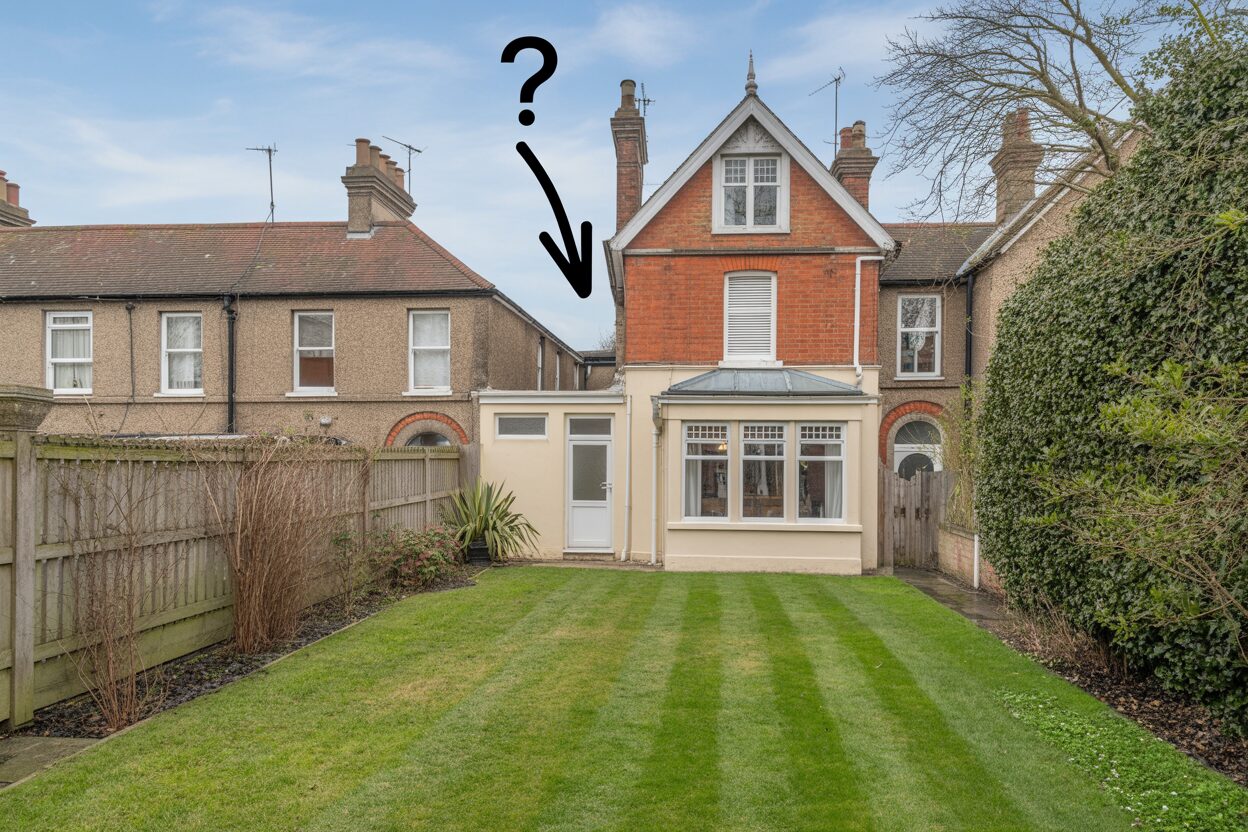
House extensions are surprisingly challenging. It’s harder for architects, surveyors and builders to work with an existing structure than a new one. That’s because every building has its own quirks like uneven levels and materials that don’t match modern standards.
In this article, you’ll learn how to choose the right architect for your house extension and what they actually do at each stage. You’ll also find out how planning rules and building regulations can affect your extension project.
Why you need an architect for your house extension project
Many people think the role of an architect is limited to simply drawing the plans for their house extension. They’re actually involved throughout the whole project from the start right through to completion.
Beyond house extension designs: what an architect does
Architects bring a wide range of skills to a house extension project, including:
| What they do | What this means for you |
| Optimise your new space | Architects use their design training to create a layout that feels open and balanced. They make sure there’s a smooth flow between your existing home and the new space. They can also spot opportunities you might miss. That could include, for example, reworking awkward corners to improve flow, add storage or bring in more natural light. |
| Solve technical challenges | They find ways round practical problems like drainage that’s hard to reroute or chimney stacks in the way. They also advise on window placement so you get the most natural light in your extension. |
| Secure planning approval | Your architect manages your application through the local planning authority. The aim is a first-time pass on planning permission. Where needed, they can also apply for lawful development certificates (LDCs). |
| Produce detailed drawings | They prepare coordinated drawings for planners, contractors and inspectors. These set out design intent and compliance and include layouts and elevations. |
| Select the right contractor | Your architect recommends builders they’ve worked with before. That gives you peace of mind because the contractor has already proved they work to a high standard. |
| Manage the project | They oversee quality through the design and build stages. At all points, they liaise with specialists like surveyors and structural engineers when needed. |
Your architect works with the following professionals on your extension:
| Role | How they contribute |
| Interior designers | Add finishes, lighting and furniture layouts so the extension feels like it has always been part of your home. |
| Architectural technologists | Turn the architect’s design into detailed construction drawings that meet Building Regulations. This helps contractors price the work properly and carry it out accurately on site. |
| Planning consultants | Guide your project through the planning process. This includes working with the council to strengthen your application and secure approval as fast as possible. |
Overseeing everything is your qualified architect. Their job is to make sure you get a design you’re happy with, built to the right standard, and approved by the council.
When is the right time to bring an architect on board to a home extension project?
You should talk to a residential architect as soon as you decide you want an extension. While having ideas to present to them is great, don’t stick too rigidly to your initial idea.
They might see better ways to get your dream home that you haven’t thought about. Help early on often saves money in the long run.
You’ll definitely need an architect for anything more complex than a simple single-storey extension. Loft extensions need careful structural work to get right because of roof load, head height and staircase placement. Roof extension projects can become complicated due to planning limits and neighbouring sightlines. Tie the extension into the existing structure can also be challenging.
Your architect will call around for a site visit at your existing property. When they’re there, discuss your budget with them. If possible, the architect will try to keep the total project cost at or below that level.
Whether your project is a loft conversion or a single or double storey extension, it’s worth speaking with an architect early on.
Understanding planning permission and permitted development rights
There are certain types of build that you need local authority planning permission for. Not every project does and that’s what we’re covering here.
Permitted Development Rights Explained
Permitted development rights let you build many types of extensions without planning permission. However, you need to stay within the limits of the rights.
Your build limits depending on your property type and the type of extension:
| Property type | Single-storey rear extension | Side extension |
| Detached house | Up to 4 m deep, or 8 m with prior approval. Maximum height 4 m, and not higher than the existing roof. | Up to half the original width. Maximum height 4 m. |
| Semi-detached house / terraced house | Up to 3 m deep, or 6 m with prior approval. Maximum height 4 m, and not higher than the existing roof. | Up to half the original width. Maximum height 4 m. |
These measurements go from the exterior walls of your original property. They don’t include any extensions already added by you or a previous owner. For example, if your home already has a rear extension, its depth counts towards the overall limit for new work. Your architect will confirm exactly what you can build during their site visit.
You can go bigger with the larger home extension scheme. With permitted rights, you can go back three meters with your single storey extension. If you apply for prior approval from your local council and they grant it, you could then build back by up to six metres. The council will consult your neighbours who have 42 days to raise any objections.
When you’ve completed the work, apply for a lawful development certificate. This proves in writing that you didn’t need planning permission for your extension. If you want to sell up or raise finance against your home, buyers and lenders will want to see this. Your architect will help you get the certificate from the council.
When you need planning permission
If your extension crosses your property boundary, you’ll need planning permission. The same applies to any two-storey extension that’s more than three metres deep. Anything extension built on the front of your house always needs approval.
If your property is in a conservation area, this will remove your permitted development rights. The council could also remove them for properties within an Article 4 Direction area.
If you do need to go for planning permission, ask your architect to represent you. They’ll prepare answers to the questions planning departments have. They’ll also include drawings, written design notes, and maps that show how your extension fits in with the surrounding homes.
Expect the process to take eight weeks for straightforward cases.
Building Regulations for house extensions
Building Regulations make sure your extension project is properly built and safe over the long term.
Only tiny extensions of thirty square metres or under are exempt from building regulations. Most house extensions need full approval no matter what planning permission says.
Three important building regulations you’ll have to meet are:
| Regulation | Covers | Impact on Your Project |
| Structure (Part A) | Load-bearing walls, foundations and structural integrity | You’ll need a structural engineer for the calculations |
| Energy Efficiency (Part L) | Insulation, thermal bridging and heating systems | Affects your wall construction and specifications of your new windows |
| Fire Safety (Part B) | Escape routes, fire doors and material standards | Critical for loft extensions and two-storey builds |
Other regulations cover ventilation, drainage, sound and electrics.
Your architect produces detailed drawings showing how your extension meets every regulation. They’ll also choose whether to apply for a:
- Full plan: This includes full construction drawings and technical details. Building Control checks and approves the plans before work starts, so you know everything meets regulations.
- Building notice application: This is a quicker, simpler option for smaller projects. You don’t submit detailed plans upfront, but Building Control inspects the work as it happens.
In most cases, your architect will choose a full plan because of the certain and proper documentation. Plus, builders prefer working from complete building regulations drawings. This means faster completion and less on-site problems to fix.
Building control inspectors will visit your property at key stages during construction. They inspect foundations, damp courses, structural work and insulation. They’ll sign off the extension when it fully meets the regulations.
The house extension process with an architect
Understanding the whole process helps you plan your timeline and budget properly.
Stage one: initial consultation and site survey
Your architect’s first job is to understand what you want and check the condition of your existing house thoroughly.
They’ll ask what you want from your home extension. This matters because the designs for, say, an extra bedroom are very different from open-plan living space. They’ll ask you to tell them about your lifestyle, family, and future plans for the property.
You’ll discuss budgets right at the start of the process. You’ll get a realistic overall project cost estimate based on current building prices. At this point, they’ll show you how you can amend the ideas you have for your extension to save money.
Your architect will need to carry out a site visit to find out about your property. They’ll run measurements and check the structural condition. They’ll also figure out the best way for builders and their machinery to get on and off your property.
The local ground conditions will influence the foundation on your extension. Trees near the property affect planning permission and structural needs. Party walls with neighbours need particular attention.
At the end of the stage, you’ll receive an accurate price based on what you’ve agreed. You can change your mind during the next phase but bear in mind this will add to your architect fees.
Stage two: design development and planning drawings
Now, you’ll start to receive designs from your architect. The first sketches will show the overall layout and shape. You’ll see a range of floor plan options with different room plan arrangements.
Keep feeding back to your architect. As you go on, the architectural drawings get more detailed with each review. Outside views show you how the extension relates to your existing house. Cross-sections show the heights of the ceiling and roof construction.
Throughout the process, your architect will be thinking about the planning process. Ideally, they’ll try to get it through using permitted development rights or prior approval. If you suggest something that would change that, they’ll explain the implications and help you decide whether it’s worth applying.
It will go one of three ways, depending on the type of extension, the property and your final plan:
- Permitted development right: Your architect confirms your extension is within permitted development limits. You won’t need to submit a formal application, but it’s still wise to keep written confirmation from the council for your records.
- Prior approval: This applies to some larger extensions. You’ll need to tell the council about your plans and wait for their written approval before starting work. They’ll consult your neighbours and check the impact on light and privacy.
- Planning permission: Your architect will create a planning applications package. This will contain a series of drawings, supporting documents, photos and notes. The council may require you to make changes to your plan before granting approval.
If it’s a permitted right, you can start work once Building Control is in place. The prior approval process takes around eight weeks, similar to a full planning application. Planning permission will also take at least eight weeks, or longer if changes are requested.
Stage three: construction and project management
Many architects can act as your build project manager. They either do it themselves or there’s someone on their team that can do it.
Working with construction firms can be difficult if you’re new to it. Appointing your architect as project manager makes sense. They will suggest trusted main contractors and build companies to you and help you choose the right build company for your project.
Throughout the build, your architect will make regular site visits to:
- Monitor progress: Check that the construction matches the architectural drawings exactly. Also make sure that the project stays on schedule.
- Quality control: Inspect work at critical stages to check that problems that would cost a fortune to fix later don’t happen.
- Coordinate specialists: Manage relationships between your main contractor, structural engineer, and other professionals.
- Problem-solving: Sort challenges during the build before they become big issues. Examples include late supplies delivery or unexpected site conditions.
- Final inspections: Check the finished project, create a snagging list and make sure it’s completed before handover.
At the end, your architect prepares the completion certificates. This proves that everything in the project meets Building Regulations. Keep these documents for when you come to sell or refinance your home.
HMO Architects: the right architect for your extension project
Extensions are a significant investment in your property. Not only do they add future value, but they give you and your family extra space to live, work and relax in comfort. Choose an architecture firm with the experience, creativity and technical skill to get every detail right.
Let HMO Architects manage your extension project from start to finish. Work with our team of fully qualified architects, architectural designers, surveyors and project managers. Here are the range of services we offer:
- Investment advice: Get tailored advice on how to build and scale your property portfolio. Personal advice from Ryan Windsor, who has worked on over 2,200 projects and started building his own extensive property portfolio when he was 17. Ask him about our portfolio building service and joint venture opportunities.
- Feasibility study: Benefit from an expert-led breakdown of your pre-buy and design renovation options for just £197+VAT. We can even produce comprehensive reports on the viability of your scheme.
- Planning permission experts: We have experience in gaining planning permission for our clients across 200 councils.
- Interior design and exterior planning: Our architects balance investment-led design with tenant appeal to maximise your yield and minimise void periods.
- On-site management: Appoint us as your Building Regulations Principal Designer (where required) to keep your project on track and compliant. We can also help you find suitable builders for your extension.
View our range of previous client case studies to see how we’ve helped clients turn their ideas into sound investments. Read customer stories on HMO, flat, holiday let and housing projects.
Call our experienced team on 01223 776 997 or email us. We are a RIBA accredited chartered practice.
Published by Giovanni Patania
on 01/03/2026
Giovanni is a highly accomplished architect hailing from Siena, Italy. With an impressive career spanning multiple countries, he has gained extensive experience as a Lead Architect at Foster + Partners, where he worked on a number of iconic Apple stores, including the prestigious Champs-Élysées flagship Apple store in Paris. As the co-founder and principal architect of WindsorPatania Architects, Giovanni has leveraged his extensive experience to spearhead a range of innovative projects.