

Published by Giovanni Patania
on 06/26/2026
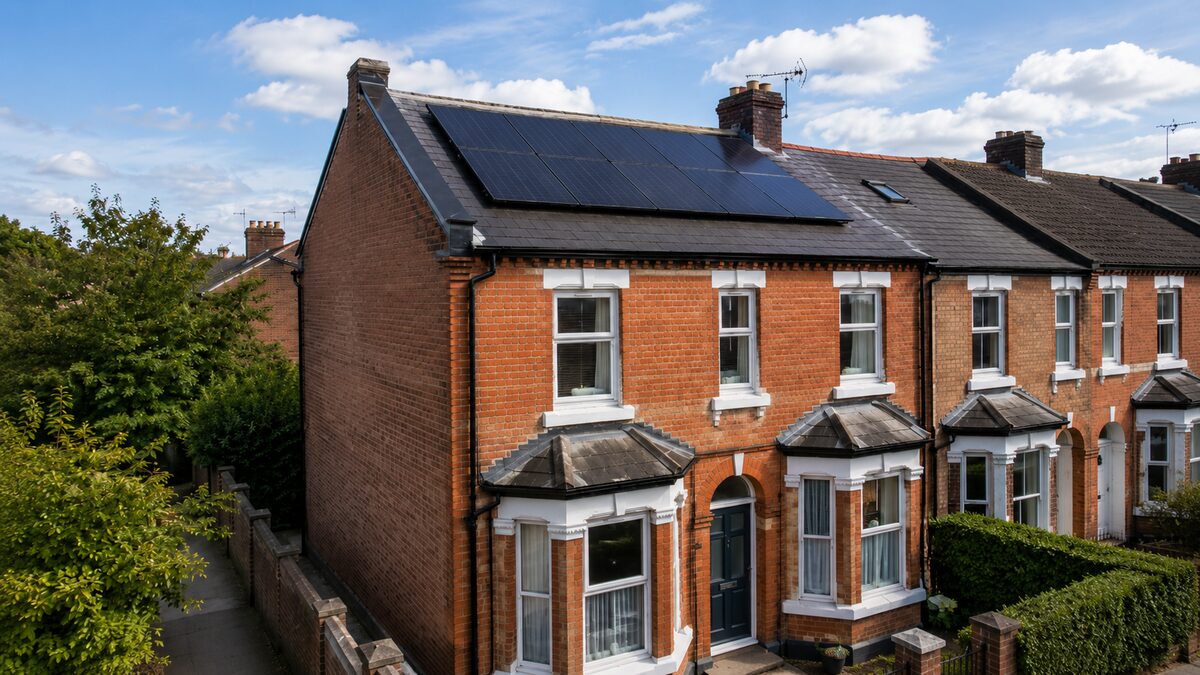
Solar panels can look like the obvious upgrade when you are planning an HMO conversion. Lower bills, a stronger EPC story, better tenant appeal and a cleaner sustainability message all sound useful.
But every pound spent on solar panels is a pound that cannot be spent on an additional bedroom, an en-suite, a loft conversion, a compliance upgrade or a layout improvement that may protect the return more directly.
That is the real question for HMO investors. Not whether solar panels add value to a property in general, but whether solar should compete for capital on this property, with this roof, this tenancy structure and this wider investment plan.
Generic value-uplift figures cannot answer that for you. A national average does not know whether your roof is shaded, whether your planning route is clean, whether bills are included, or whether another upgrade would do more to protect your refinance, rent or long-term compliance position.
If you are already weighing solar against other items on this project’s spec, a call with HMO Architects can pressure-test where it sits before you commit budget. We would look at your roof, your layout, your EPC position and what is already locked into the design, rather than working from a checklist that was not written for your building.
Use the Solar Capital Allocation Filter™ Before You Commit
Solar is not just an energy decision. In an HMO, it is a capital allocation decision. Before you approve the spend, test the idea across four areas:
- Project priority: Does solar protect the return better than another bedroom, en-suite, layout change, compliance upgrade or EPC improvement?
- Planning and control: Does the roof qualify for permitted development, and are there any local, listed building, conservation, Article 4 or application constraints?
- Technical fit: Can the roof, structure, orientation and shading support a system that performs well enough to justify the spend?
- Benefit capture: Who actually receives the saving: the landlord, the tenants, or the occupier paying the bill?
Most weak solar decisions are not weak because the technology is wrong. They are weak because the system is assessed in isolation from the HMO business model.
What the Value-Uplift Figures Don’t Tell You
Some of the research behind the headlines is useful. Homes with solar can attract a premium, and energy performance is increasingly part of how buyers, tenants and lenders judge property quality.
But many investors overestimate the resale premium and underestimate the operational benefits. For an HMO, the value may show up less as a guaranteed sale-price uplift and more as better marketability, lower running costs, a stronger EPC story and a property that feels easier to let or manage.
That distinction matters because most headline figures are drawn from standard owner-occupied sales, not multi-let HMOs. If you are asking whether solar panels increase property value on a single self-contained let, the case may be easier to read. In a multi-let HMO, the answer depends on how the property is run as much as how it is built. Solar is one route to improvement, but it should be weighed against other energy efficiency upgrades available to an HMO before you assume panels are the strongest lever for your building.
The EPC Protection Principle™
Future EPC expectations may affect letting ability, refinance confidence, tenant appeal and long-term asset quality. Solar can help, but it is not always the best first move. The stronger route is to compare solar against insulation, heating, glazing, ventilation, controls and other improvements that may move the EPC rating more efficiently. For a wider view, our guide to current EPC requirements for HMOs explains the landlord-facing position in more detail.
The principle is simple: do not buy solar because it sounds green. Use it when it protects the property’s performance, compliance and commercial case better than the alternative spend.
Planning and Permitted Development
Most domestic solar installs in England may fall under permitted development rules, but the Planning Portal guidance on solar panels makes clear that important limits and conditions still apply. The answer can change if the property is listed, in a conservation area, affected by local constraints, or if the installation sits outside the permitted development limits.
Planning risk should be assessed before obtaining installation quotes. Otherwise, you may price a system that cannot be installed in the form you assumed.
For HMO projects, the planning question often sits beside other decisions. If your conversion already involves a planning application for a loft extension, change of use or wider HMO works, raise solar at the same time so it is considered against the same conditions. Our guide to planning permission for an HMO covers the broader route, and if your area has an Article 4 Direction in place, it is worth checking whether permitted development assumptions are still safe for the wider project.
This is also the point to bring in whoever is handling your Building Regulations application. Structural and electrical sign-off for the roof work needs to sit alongside the planning answer, not follow it as an afterthought.
Roof and Structural Suitability Drive the Return
Planning permission tells you whether you are likely to be allowed to fit panels. It does not tell you whether the roof is suitable for them.
Orientation, pitch and shading determine how much electricity the system actually generates. A roof that spends too much of the day in shadow from a chimney, dormer, neighbouring property or taller building may produce far less than the headline output suggests.
A lot of converted HMO stock, particularly older terraces, also comes with roofs that have not had a structural assessment in decades. That matters before you add panels, mounting kit and any associated roof works.
Many solar decisions are treated as procurement exercises when they are actually design decisions. Getting the roof assessed as part of your wider architectural design review, rather than as a separate quote bolted on afterwards, is what stops the solar decision working against the rest of the layout.
Project Example: Maesteg Road
We saw this on a five-bed property on a sloped site in Swansea, taken through to a seven-bed HMO with en-suites and a shared lower ground floor space. The slope made the loft conversion and room layout the harder problem to solve, but it also meant solar was weighed against the roof plan from the start, rather than added once the building was already finished. You can see the project on the Maesteg Road project page.
The lesson was not that every HMO needs solar. The lesson was that solar only made sense once it had been considered alongside the wider design strategy, roof constraints and investment priorities.
Who Actually Benefits From the Savings?
This is the part most general advice on solar skips, and it is the one that decides whether the investment makes sense for an HMO specifically.
The same solar system can produce completely different returns depending on how the property is operated. Technology rarely determines the return on its own. Management structure often does.
If your tenancies are billed individually, any reduction in electricity costs may benefit the tenant who pays that bill, not you directly. Your return may come through marketability, EPC improvement and tenant appeal rather than a clean utility saving in your own numbers.
If bills are included in the rent, the saving lands closer to you, but you also carry more of the variability in how much electricity the household uses. That can make solar more relevant, but only if the usage pattern and billing setup are properly understood.
The Benefit Capture Test™
Before installing solar, ask who pays the electricity bill, who receives the saving, who receives any export payments, who carries maintenance responsibility, and whether the tenancy agreements match the way the system will be operated.
Settle this before the panels go in. Changing a metering or billing arrangement around a system that is already installed costs more and causes more friction with tenants than deciding it at the design stage. Our guide on how to set up an HMO is a useful starting point if you are still working through the operating model.
Working Out If Solar Is Worth It on Your HMO
Once you have checked planning, roof suitability and the billing model, you can cost the project properly. At that point, the question becomes less about national averages and more about whether solar earns its place in this specific build budget.
The Solar Due Diligence Sequence™
Run the checks in this order:
- Confirm the permitted development or planning position with the council or Planning Portal, and consider a Lawful Development Certificate if you want certainty in writing.
- Assess roof orientation, shading and structure alongside the wider design work, not as a separate add-on.
- Confirm the tenancy, metering and billing structure so you know where the saving actually sits.
- Model the EPC impact before and after installation, then compare solar against alternative upgrade strategies.
- Use MCS-accredited installers and run the payback calculation against your real electricity use, not a generic household average.
- Check lender, insurer and maintenance implications before committing.
You can search for MCS-certified installers once the project case has been tested. But the installer quote should not be the first step. It should come after the planning, roof, EPC and billing logic are clear.
Skipping the sequence is what creates expensive surprises: finding out after installation that the roof needed strengthening, the planning assumptions were too loose, or the billing setup makes the saving harder to capture than you expected.
Solar should rarely be assessed in isolation from the wider project budget. If you are weighing panels against other items on the capex list for this conversion, our guide to development finance for HMO projects is a useful next read.
What to Do Next
Whether solar panels increase your property’s value enough to justify the spend is not something a national average can settle for you. It depends on your roof, your council, your EPC position, your tenancy structure and what else the budget needs to achieve.
Once you work through those checks, cost usually stops being the only question. What matters is whether the design, planning route, EPC strategy and billing decision line up before anything goes on the roof.
Planning a conversion? Assess solar alongside planning, EPC and layout decisions before the spec is fixed.
Looking to improve EPC? Compare solar against insulation, heating, glazing and other upgrade strategies before choosing the spend.
Building your project budget? Stress-test every capital expenditure item before committing, so solar does not crowd out a more valuable improvement.
A free call with HMO Architects™ can help you walk through your roof, your numbers and where solar realistically sits against the rest of the build, so you leave with a concrete next step rather than another generic answer.
For more on how HMO projects like this get planned, funded and improved, the HMO Masters newsletter is worth a look too.
FAQs
Do Solar Panels Increase House Value in the UK the Same Way for HMOs as for Standard Homes?
Not reliably. National figures are usually drawn from standard owner-occupied sales. For an HMO, the return is shaped more by marketability, EPC rating, tenancy structure and operating model than by a guaranteed resale premium.
Will Solar Panels Improve My HMO’s EPC Rating Enough to Meet Future Minimum Standards?
Solar can help, but the improvement depends on the system, the roof, the heating setup and the rest of the property’s fabric. Get a proper EPC assessment rather than relying on a generic points estimate. Our guide to current EPC requirements for HMOs covers what landlords need to understand.
Is Solar Usually the Best EPC Improvement for an HMO?
Not necessarily. The best solution depends on the building’s current condition, heating system, insulation levels, roof suitability and projected occupancy model. Sometimes insulation, heating upgrades or controls may produce a stronger result for the same budget.
Do I Need Planning Permission for Solar Panels on an HMO Conversion?
Most domestic solar installs may fall under permitted development, but conditions vary by building, location and local constraints. Check the Planning Portal guidance and your local planning authority before assuming it applies to your project.
Who Receives Any Export Payments When a Property Has Multiple Tenancies?
That depends on how the system is set up, who holds the energy account, and what the tenancy agreements say. Decide this before installation, not afterwards.
Should Solar Panels Be Assessed Before or After the HMO Layout Is Designed?
Before the layout and roof strategy are fully fixed. If solar is left until the end, you may discover that the roof, loft conversion, dormer positions or services strategy limit what can be installed.
Should I Install Solar If Tenants Pay Their Own Bills?
It may still help with EPC rating, marketability and tenant appeal, but the direct saving may sit with the tenant rather than the landlord. That does not make solar wrong, but it changes how you calculate the return.
Published by Giovanni Patania
on 06/26/2026
Giovanni is a highly accomplished architect hailing from Siena, Italy. With an impressive career spanning multiple countries, he has gained extensive experience as a Lead Architect at Foster + Partners, where he worked on a number of iconic Apple stores, including the prestigious Champs-Élysées flagship Apple store in Paris. As the co-founder and principal architect of WindsorPatania Architects, Giovanni has leveraged his extensive experience to spearhead a range of innovative projects.