

Published by Giovanni Patania
on 08/07/2026
The letting agent’s renewal letter, the tenant who emailed about the heating bill, the mortgage review that flagged your EPC — something has shifted energy efficiency up your list. You are probably not starting from zero. The regulations are tightening, you have likely seen your EPC, and you have a rough sense of what is coming. What is less clear is where to begin, which upgrades will actually move the dial, and whether the 2030 picture is as simple as some sources make it sound. The biggest mistake landlords make isn’t waiting until 2029, it’s spending the first available pound in the wrong place.
It is not complicated, but it requires some care, particularly in HMOs, where the building dynamics, the tenant relationships, and the compliance position are meaningfully different from a standard single-let. Most EPC guidance stops at “how do I get to band C”. The sharper question for an investor is how you get there without accidentally reducing the property’s value or rental income along the way, because compliance was never really the objective, better investment decisions are.
The quickest way to get a clear picture is to talk it through before committing to anything. HMO Architects offers a complimentary discovery call where we look at the specific property, understand what you are working toward, and map out where the most sensible starting point actually is, so you are not spending money in the wrong order. Book a call here.
The rest of this guide walks through the decisions in the order they tend to matter most.
| Upgrade | Typical EPC Impact | Cost | Disruption |
|---|---|---|---|
| Loft insulation top-up | High | Low | Low |
| Cavity wall insulation | Medium–High | Low–Medium | Low |
| External wall insulation | High | High | High |
| Internal wall insulation | Medium–High | Medium | Medium (room loss) |
| Heat pump (fabric-dependent) | Medium | High | Medium |
| Smart heating controls | Low–Medium | Low | Low |
What the 2030 deadline actually means for your HMO
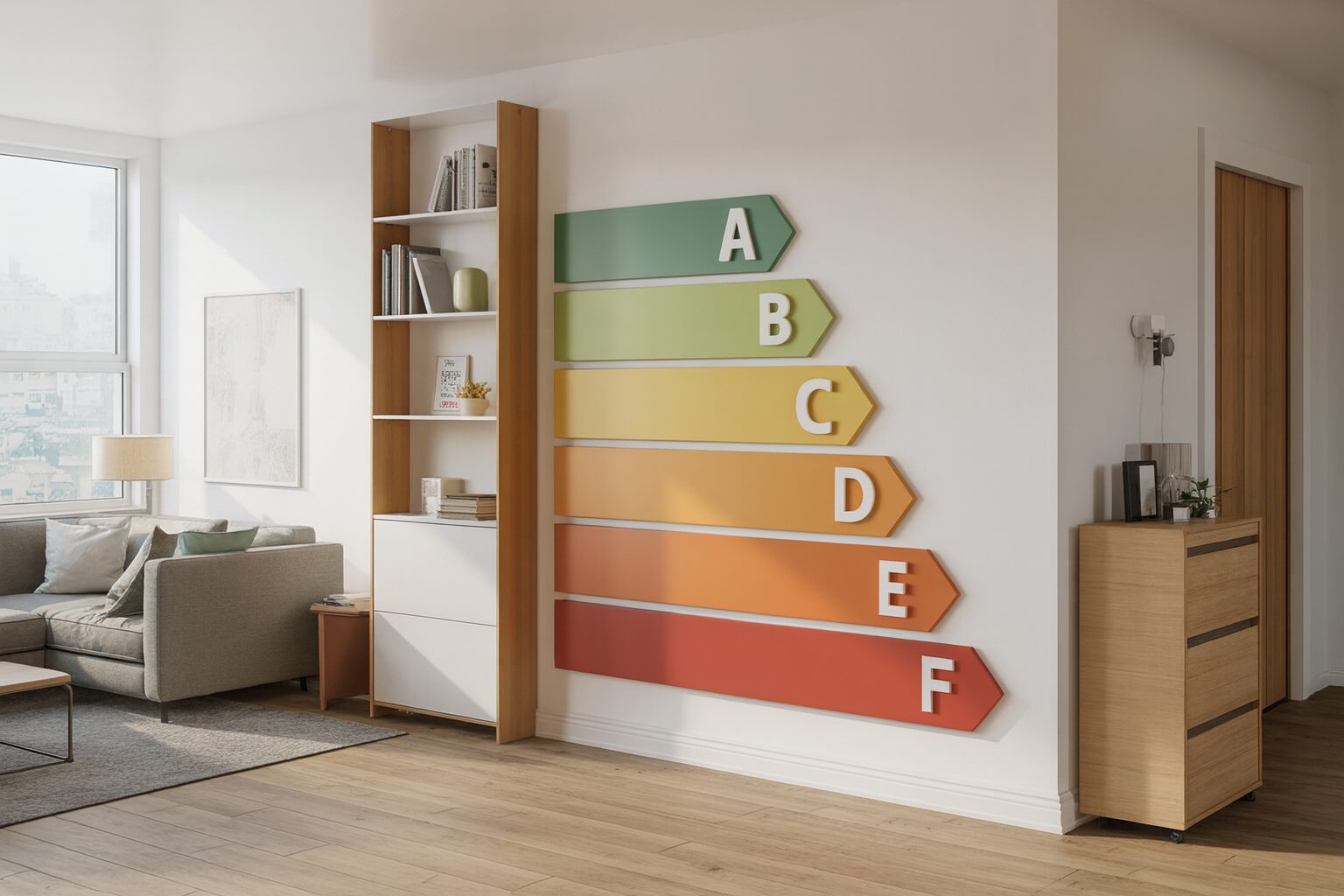
The current legal minimum under MEES (Minimum Energy Efficiency Standards) is EPC band E, the floor for domestic private rented properties in England and Wales since April 2020. If your HMO sits at E, you are compliant today.
The government has confirmed — as policy, not yet enacted in statute — that all private rented properties in England and Wales will need to meet the equivalent of EPC band C from 1 October 2030, covering new and existing tenancies alike. The cost cap is £10,000 per property, and qualifying expenditure from 1 October 2025 already counts toward it. Keep your receipts.
The target date matters less than understanding your starting point. Two identical EPC ratings can require completely different upgrade strategies depending on the building behind the number, which is exactly why the fabric-first sequence below matters more than the certificate itself.
There is one further complication worth planning around. The current assessment methodology (SAP/RdSAP) is due to be replaced by a new Home Energy Model (HEM) from October 2029. The HEM assesses fabric, heating systems, and smart readiness separately, and the thresholds defining “band C” under the new system have not yet been confirmed. Achieving EPC C today does not necessarily guarantee compliance under the Home Energy Model after 2029, worth factoring into any major investment decision now.
The GOV.UK MEES landlord guidance, last updated May 2026, is the right place to verify the current position for your property. For a fuller explanation of how EPC ratings are calculated and what the bands mean in practice, our guide to HMO EPC requirements covers this in detail.
If you let rooms individually, read this first
HMOs let on a room-by-room basis — where each occupant signs their own tenancy agreement — may not currently be legally required to have an EPC. The EPC requirement has historically applied to whole-property tenancies.
That changes in 2030. The government intends to extend EPC requirements to whole HMOs regardless of tenancy structure. Waiting until EPCs become mandatory again removes valuable planning time you could be using now. If you have been letting room-by-room without an EPC, get one now, understand your baseline, and plan from there. For the broader compliance picture in one place, the HMO compliance handbook is a useful reference.
Start with the building fabric — it’s the biggest lever
Before replacing a boiler or specifying a heat pump, look at the building envelope. Insulation, airtightness, and glazing determine how much heat the property loses, which in turn determines how hard any heating system has to work. Technology cannot compensate for heat escaping through the building, and getting the sequence wrong is one of the most common and expensive mistakes we see landlords make.
Current guidance suggests a minimum loft insulation depth of 270mm of mineral wool or equivalent, in line with Building Regulations Part L. If your loft insulation is shallower than this, adding it is typically one of the most cost-effective improvements available and will register clearly on an updated EPC. Every pound spent improving the building fabric increases the effectiveness of every pound spent on heating afterwards, which is why this step comes first, not last.
External walls are more variable. Cavity walls can generally be filled, a straightforward intervention with a clear efficiency gain. Solid-walled properties, common in older HMO stock, are a different matter. External wall insulation is effective but more disruptive, more expensive, and sometimes subject to planning constraints on appearance. Internal insulation is an alternative, but it reduces room dimensions, in an HMO, where room size affects licensing standards and what you can charge, that trade-off needs careful thought before you commit. Improving EPC should never unintentionally reduce the property’s commercial performance, which is exactly what our Net Yield Reality Check™ is built to catch: an upgrade that improves the certificate but quietly erodes the rent roll behind it.
The reason the fabric-first sequence matters so much in retrofit is that the building already exists. You are working around existing structure, existing layouts, and live tenants. In a conversion project, the opportunity to design energy performance in from the start is far less disruptive and far less expensive. We worked through this at the Ashton Methodist Church in Manchester, a Victorian building with thick stone walls, original window reveals, and a heritage-sensitive planning authority. A 12-unit conversion in a building like that does not allow for an off-the-shelf solution. The challenge here wasn’t specifying insulation, it was balancing conservation requirements, thermal performance, and commercial viability simultaneously, and that is where architectural judgment has to sit alongside the thermal calculation, sometimes instead of it.
For a retrofit project where the same insulation decision had to be solved under tighter cost and room-size constraints, the Earls Crescent project in London shows how internal insulation delivered EPC C without the room loss that external cladding would have required.
Heating, hot water, and the heat pump question
Once the fabric is as good as it reasonably can be, heating and hot water are where the next gains sit.
Modern condensing boilers achieve efficiency ratings of around 90% or higher, compared to 70–80% for older non-condensing units. If your HMO still has an ageing system, replacement is worth considering as part of the wider decarbonisation picture, but sizing matters more than most landlords realise. An oversized boiler short-cycles: it fires up, reaches temperature quickly, and shuts off before it can run efficiently. A heat loss calculation before specifying any replacement gives you a better-performing system and a more defensible specification. Our guide to HMO heating regulations covers the compliance angle in more detail, including when heating works trigger a Building Regulations route.
Any boiler replacement or heating upgrade is also the natural moment to check your carbon monoxide detection, not just because it’s good practice, but because Building Regulations require a CO alarm in any room containing a combustion appliance. A sealed, 10-year carbon monoxide alarm removes the recurring cost of battery swaps across a multi-occupied property, which matters when you are covering several kitchens or shared heating cupboards rather than a single unit.
Well-insulated hot water cylinders cut standing losses, the heat that dissipates even when nothing is being drawn. In a large HMO with multiple bathrooms, this is worth quantifying before dismissing it. Point-of-use water heaters in specific locations can also help where circulation losses from a central system are significant.
The heat pump question deserves a direct answer. Heat pumps don’t solve poor building performance, they expose it. Air source and ground source heat pumps are genuinely efficient, but they are not a straight swap for a gas boiler. A heat pump delivers heat at lower flow temperatures, which means the property needs to be well insulated and usually requires larger heat emitters — bigger radiators or underfloor heating — to maintain comfortable temperatures. In an HMO with tighter room sizes, that becomes a genuine design constraint, not just a technical one. Before specifying a heat pump in any retrofit HMO, commission a heat loss assessment and confirm whether the existing heat emitters are adequate and the electrical capacity is sufficient. Without that readiness check, you risk a system that underperforms and is harder to defend if questioned.
Controls, smart systems, and tenant engagement
The most efficiently insulated HMO can still carry high energy bills if usage habits are poor. HMOs face a challenge single-lets do not: multiple tenants with varying habits, shared cost responsibility, and no structural incentive for any individual to conserve energy. The most efficient building can still have high energy bills if occupants use it inefficiently.
Smart controls and monitoring let you manage this more precisely. Zone controls and programmable thermostats deliver heat where it is needed rather than running at full output throughout the building. A multi-zone smart thermostat kit is a practical way to apply this in an HMO specifically, since it lets you set different schedules room by room instead of heating the whole property to suit the person who runs coldest. Monitoring can surface inefficiencies before they become a running cost problem, a communal bathroom towel rail that never switches off, a ground-floor area heating through the night.
Sensor-controlled lighting in communal areas removes the problem of lights left on in stairwells and bathrooms without requiring tenants to change anything.
Tenants who understand how the heating system works — and who feel some stake in the bills — use energy differently from those who do not. Good design and good tenant behaviour work together; neither fully compensates for the absence of the other. A simple welcome note explaining the controls and what drives usage is a modest investment. Properties where landlords take this step tend to see fewer complaints about temperature and lower all-inclusive bill exposure over time.
If that broader picture, controls, monitoring, how it fits your property specifically, is what you need clarity on, the discovery call is the right place to work through it, we will help you identify where the most practical gains sit for your building and your tenants.
Funding the work — what’s available right now
Warm Homes: Local Grants, administered through local councils, can fund insulation and heating upgrades. Availability and eligibility vary. Check with your local authority first, some schemes target landlords whose tenants receive qualifying benefits; others are more broadly available.
ECO4 (the Energy Company Obligation) works through energy suppliers. If any of your tenants receive Universal Credit, Pension Credit, or child benefit at certain income levels, your property may qualify for funded works including loft insulation, external wall insulation, or heating system replacement.
The Boiler Upgrade Scheme provides a grant toward replacing a fossil fuel system with a heat pump. The grant level has been updated since launch, check the current figure directly with the scheme.
On the MEES cost cap: the confirmed figure for the 2030 regime is £10,000 per property. Qualifying expenditure from 1 October 2025 already counts toward it. Funding should influence timing, not whether the upgrade is commercially worthwhile in the first place. Landlords who act before 2029 are lowering their future compliance bill — and building a record of qualifying expenditure that counts from day one. That record-keeping matters more than it sounds: a tool built for tracking HMO compliance paperwork in one place makes it far easier to hold onto receipts, exemption evidence, and upgrade dates across a portfolio than a folder of invoices ever will. If a property cannot reach EPC C within the cap, a cost cap exemption can be registered on the PRS Exemptions Register and the property can continue to be let.
If you want to model the financial impact of an upgrade programme, our guide to HMO running costs includes a breakdown of typical operating cost categories.
When the building makes it harder
Most energy efficiency guidance is written for standard properties. Older HMO stock — pre-1919 terraces, converted commercial buildings, former institutional properties — sits outside that standard in ways that matter practically.
Listed buildings and properties in conservation areas face additional constraints on the works that planning and conservation authorities will permit. Heritage constraints often require different design solutions rather than preventing energy improvements altogether. External wall insulation may affect the appearance of the building in ways a conservation officer will not approve. Replacement windows may need to match original profiles. Roof insulation in certain heritage buildings requires a more careful specification to avoid moisture and ventilation issues.
That does not make improvement impossible. It means the specification needs more care, and the design solution is rarely the obvious one. Exemptions are available where improvements would unacceptably alter the character of a listed or heritage building, and these can be registered on the PRS Exemptions Register — but the exemption is not automatic. It requires documented evidence that the work cannot be carried out without that harm, the same standard of proof behind our Planning Evidence Test™ on any heritage-constrained project.
HMO Architects works as both architect and investor, which means the upgrade advice we give is shaped by what protects your yield as much as what meets the compliance standard. Across our retrofit projects, the mistake we see most often isn’t a badly specified upgrade, it’s a well specified one done in the wrong order. Most landlords leave the discovery call with a clearer picture of their compliance position than they arrived with — and a more realistic sense of which works will actually pay off.
Below EPC C right now? We can help build an upgrade roadmap in the right order. Planning a conversion? Design energy performance into the project from day one instead of retrofitting it later. Not sure which upgrades actually matter for your building? Book a feasibility review before committing to any works.
If you want to keep up with regulation changes and funding updates as they develop, the HMO Masters Newsletter covers this kind of material regularly and without the noise.
Frequently asked questions
What is the minimum EPC rating for an HMO in England?
The current legal minimum under MEES is EPC band E, which has applied to domestic private rented properties since April 2020. The government has confirmed a policy commitment to raise this to the equivalent of band C from 1 October 2030, subject to formal legislation.
Does a room-by-room HMO need an EPC?
Under current rules, HMOs let on individual room tenancies may not be legally required to have an EPC. From 2030, the government intends to extend EPC requirements to cover whole HMOs regardless of how tenancies are structured. Getting an EPC now gives you a clear baseline to plan from.
Is a heat pump suitable for an HMO?
Potentially, but not without proper assessment first. Heat pumps require a well-insulated building and usually larger heat emitters to function efficiently at lower flow temperatures. A heat loss calculation and review of existing radiator sizing should come before any commitment to specification.
What grants are available for HMO energy efficiency improvements?
Warm Homes: Local Grants (via local councils), ECO4 (for properties with tenants on qualifying benefits), and the Boiler Upgrade Scheme (for heat pump installation) are the main routes. Availability and eligibility vary — check with your local authority and relevant scheme providers for current terms.
What is the MEES cost cap for landlords?
For the 2030 compliance regime, the confirmed cost cap is £10,000 per rental property. For properties valued under £100,000, this reduces to 10% of the property value. Qualifying expenditure from 1 October 2025 counts toward the cap.
Does loft insulation alone improve an EPC rating?
Yes, in most cases — particularly where existing insulation is below the recommended depth of 270mm. It is typically one of the most cost-effective improvements available and registers clearly on assessments.
What is the cheapest way to improve an EPC?
In most cases, loft insulation, provided the existing depth is below the recommended 270mm. It is inexpensive relative to other upgrades, registers clearly on an EPC assessment, and rarely requires planning permission or disrupts tenants, which makes it the natural starting point before any heating or fabric work further up the cost scale.
This guide covers England and Wales. Scotland has separate energy efficiency regulations under EESSH2 with different timescales and requirements.
Regulation in this area is subject to ongoing change. Verify the current position with GOV.UK and relevant scheme providers before committing to any works or compliance strategy.
Published by Giovanni Patania
on 08/07/2026
Giovanni is a highly accomplished architect hailing from Siena, Italy. With an impressive career spanning multiple countries, he has gained extensive experience as a Lead Architect at Foster + Partners, where he worked on a number of iconic Apple stores, including the prestigious Champs-Élysées flagship Apple store in Paris. As the co-founder and principal architect of WindsorPatania Architects, Giovanni has leveraged his extensive experience to spearhead a range of innovative projects.